
Checking Criminal History in Hunt County
Begin with the event, not with a broad name search. Hunt County Public Access is the first online stop for many filed district cases, while the County Clerk points misdemeanor researchers toward iDocket. The official jail search answers a different question: who is now in custody or who was booked during a selected date range. A sheriff incident report, a court judgment, and a DPS history entry can all describe one event from different stages.
Use a full legal name and any known birth date, case number, incident number, arrest date, or filing year. Small details help separate people with similar names. Then follow the record to its custodian. A screen result may identify the right cause, but only the clerk can issue the certified charging instrument or judgment.
- Search the county court or jail channel that matches the event.
- Confirm the court, booking number, dates, and agency before assuming a match.
- Request the underlying report from the arresting agency and filed papers from the correct clerk.
- Compare the filed charge with the final disposition, since intake charges can change.
- For your own broader Texas record, use the DPS fingerprint review process.
The official Hunt County homepage shows the courthouse and department directory used to verify each office. The image below reflects the county source rather than a generic courthouse illustration.

The courthouse is the records hub for filed cases, but sheriff and jail records remain at the public-safety complex.
Which Hunt County Clerk Holds Records?
The charge level decides the clerk. The District Clerk maintains felony cases filed in the 196th and 354th District Courts. The County Clerk maintains Class A and B misdemeanor cases in County Courts at Law Nos. 1 and 2. Fine-only municipal and justice matters stay with those lower courts. Sending one request to the courthouse without naming the correct clerk can delay a Hunt County criminal records search even though both county clerks work on the second floor.
District Clerk
2507 Lee Street, second floor, Greenville
(903) 408-4172
Felony court files
County Clerk
2507 Lee Street, second floor, Greenville
(903) 408-4130
Class A and B misdemeanor files
The Hunt County District Clerk page links its records form and describes the district courts.
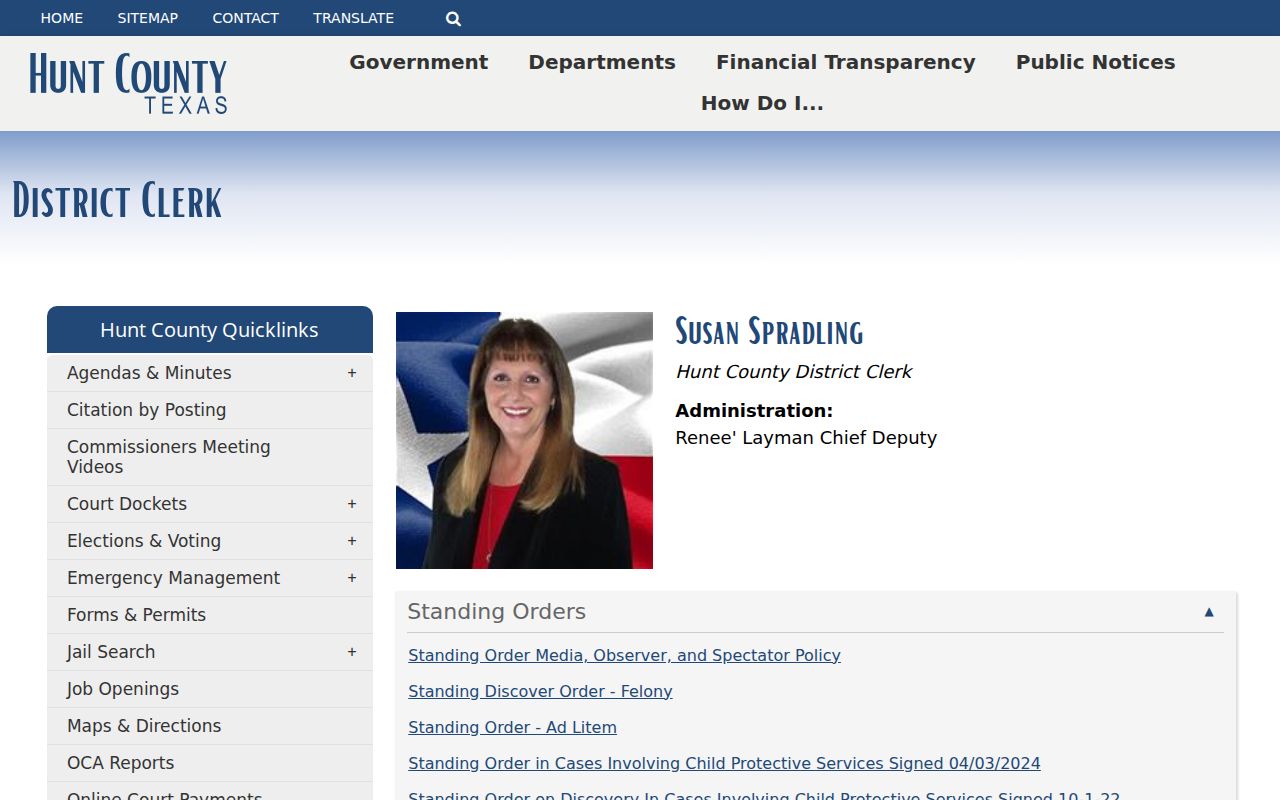
The counter is the fallback for files or documents that are not available through the public portal.
Texas Official Background Checks
The Texas Department of Public Safety Crime Records Division maintains the statewide Computerized Criminal History system. Its Criminal History Conviction Name Search releases the statutorily public portion, chiefly convictions and deferred adjudications. It requires an account and prepaid credits. A hit is not conclusive identity because names can match, and a no-hit still consumes a credit.
For personal review, fingerprints provide the stronger identity link. Texas FAST appointments use IdentoGO and service code 11FT12. The official amounts are $10 for fingerprint collection and $15 for Texas criminal-history information. DPS also explains how a person can challenge an apparent error in their own record.
| Product | Scope | Access |
|---|---|---|
| DPS public name search | Public Texas conviction and deferred subset | $1 credit, plus card charges |
| DPS fingerprint review | Your own fuller Texas record | FAST appointment, $25 base total |
| Hunt County clerk copy | Exact local filed case | Portal, counter, or records request |
The Texas FAST scheduling portal is the current source for locations and appointment times.
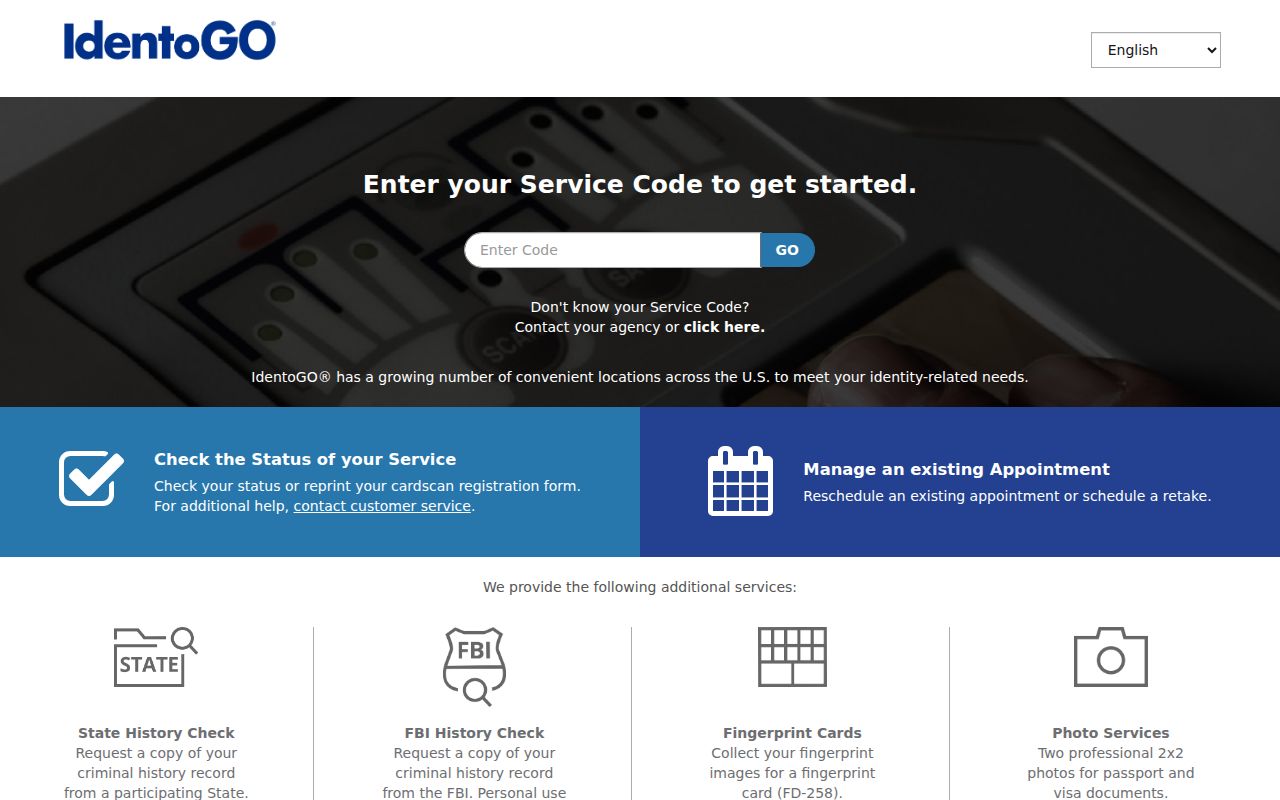
Applicants should enter the correct service code because the code controls where authorized results are sent.
Hunt County Criminal Case Portal
Hunt County Public Access uses a Tyler-hosted Smart Search. It commonly accepts a record number or party name. Advanced filters may narrow by status, filing dates, case type, party type, or court location. Controls can change, so the live required markers govern. A register of actions may be visible even when a pleading image is not downloadable.
| Search field | Use | Limit |
|---|---|---|
| Record number | Direct cause lookup | Exact formatting may matter |
| Party or business name | Find possible case matches | Confirm identity in the case detail |
| Filed date and status | Narrow large result sets | Older entries may need clerk help |
| Case type and court | Separate felony or other dockets | Not every document is public online |
The re:SearchTX platform provides controlled electronic-document access across participating Texas courts, but it is not a universal statewide criminal background search.
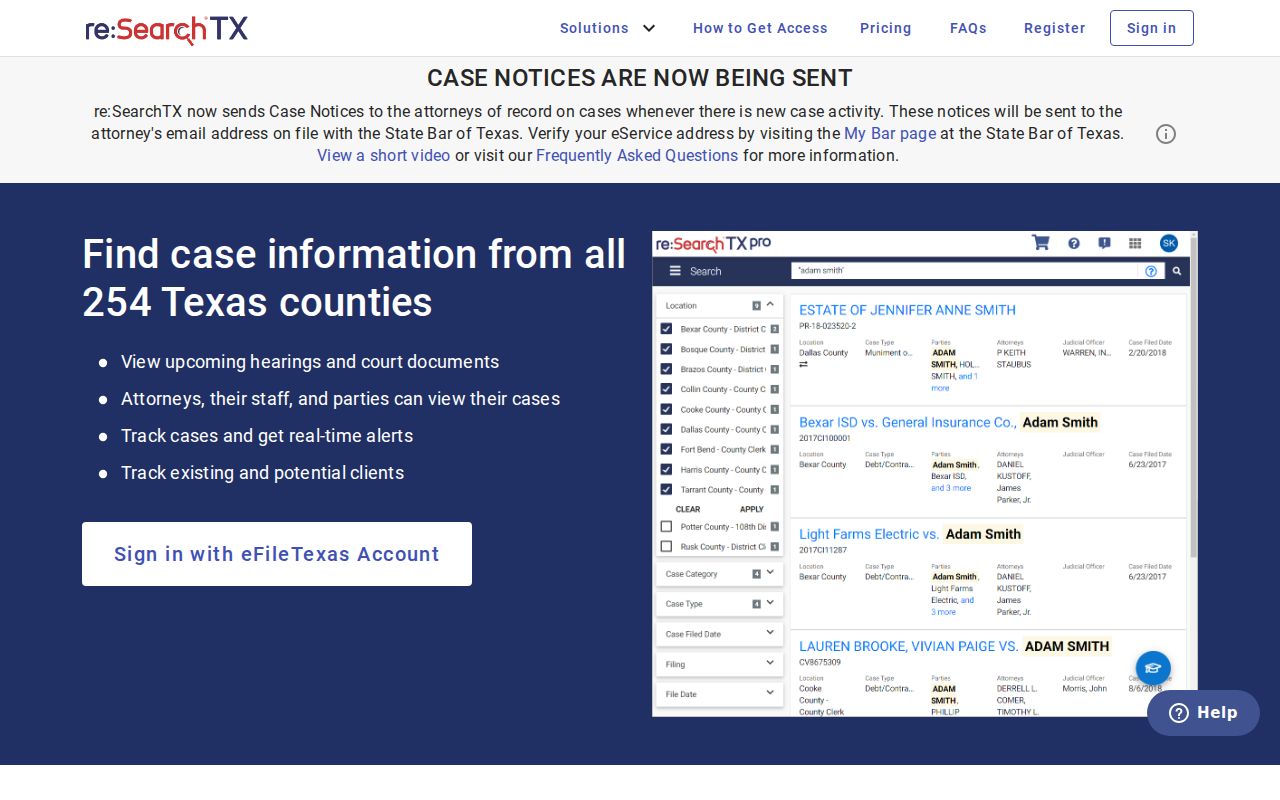
For Hunt County criminal court cases, the local portal and the responsible clerk remain the core sources.
Criminal Record Types
A criminal event can create several records. The arresting agency writes the incident or arrest report. Jail staff create a booking entry and record the intake charge and bond. A prosecutor may file a different charge, and the clerk then adds settings, pleas, orders, and the result to the case file. DPS can link reportable arrest fingerprints to later disposition data.
- Agency report: narrative, event facts, alleged offense, and officer activity.
- Booking entry: intake date, custody state, charge, bond, and booking identifiers.
- Court file: complaint, information or indictment, docket events, judgment, and sentence.
- Repository entry: reportable arrest cycle joined to prosecutor and court reporting.
- Supervision or registry record: a separate operational or public-notification source with its own access rules.
The County Clerk's criminal record request instructions explain the misdemeanor inspection and certified-copy routes.
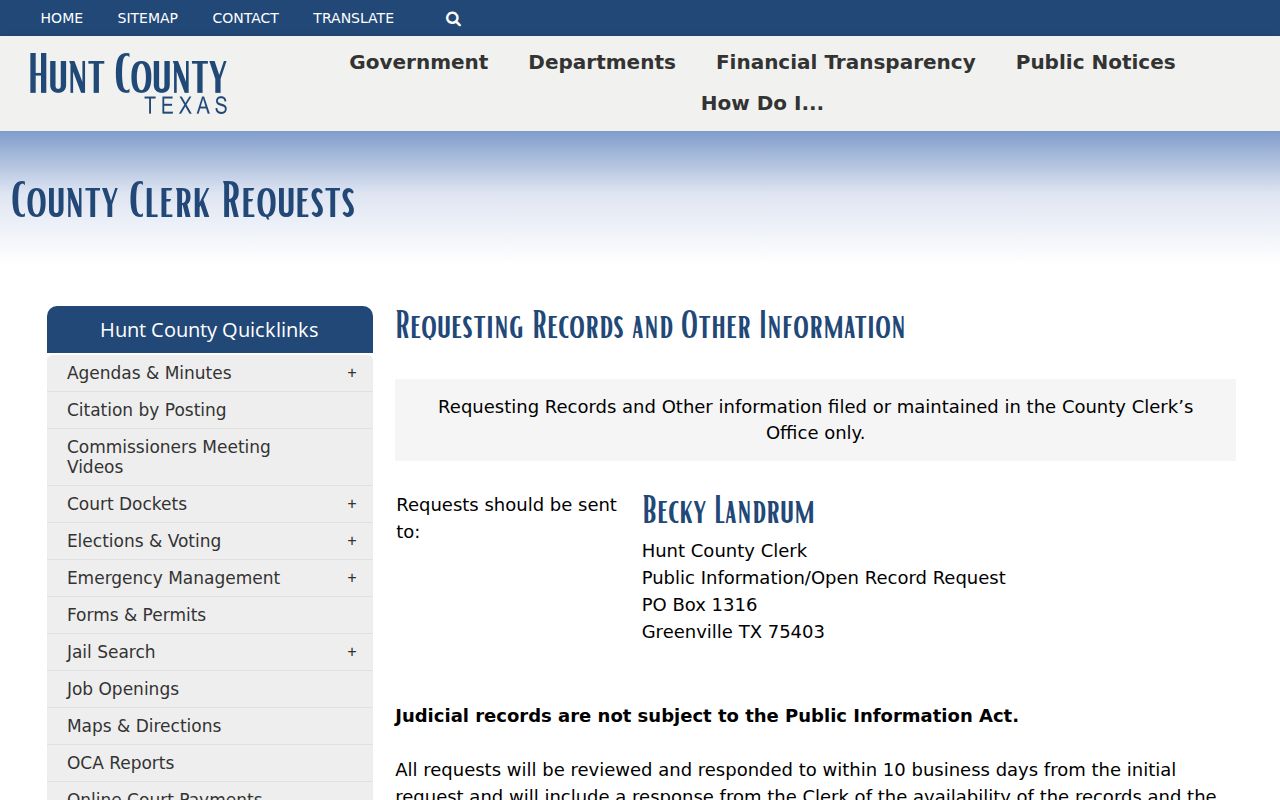
A portal printout may aid research, but it is not the same as a certified clerk copy.
Hunt County Sheriff Record Requests
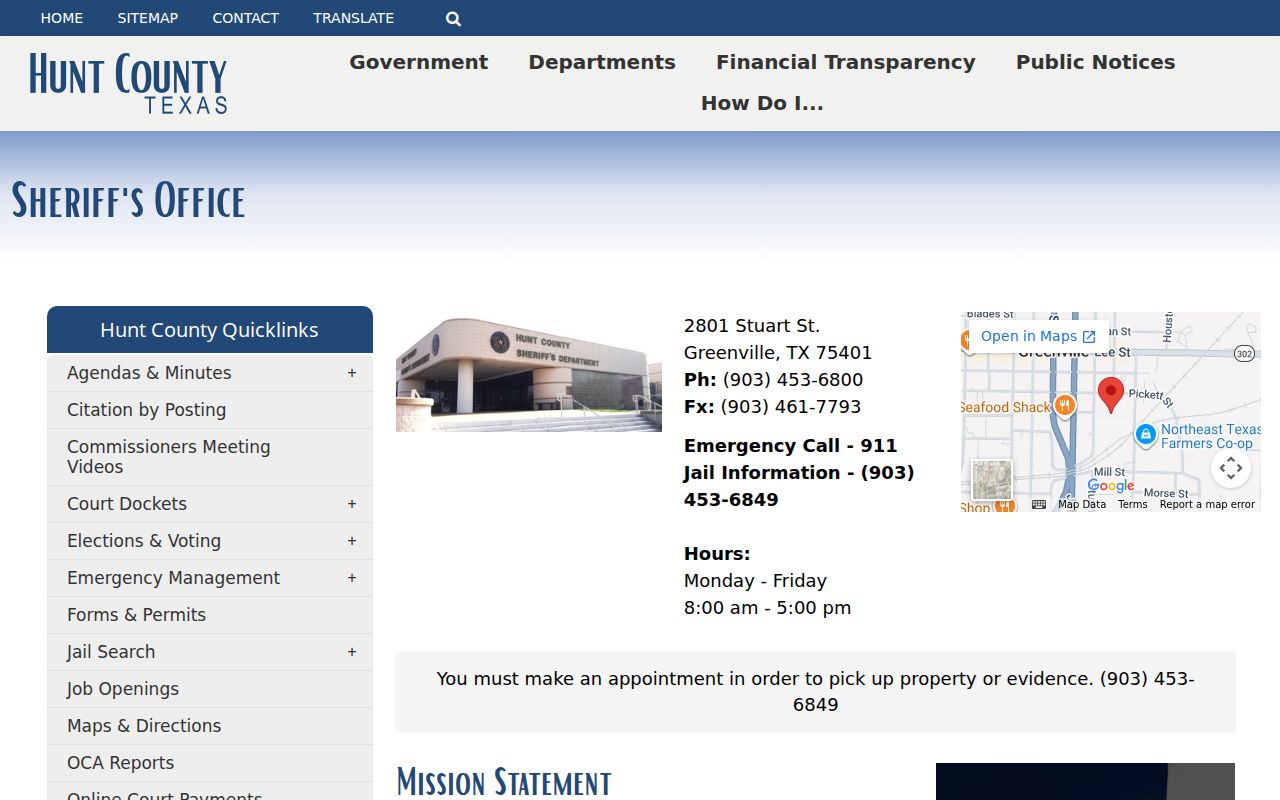
The Sheriff's Criminal Investigations Division is the verified route for sheriff offense and arrest reports. Requests may be delivered to 2801 Stuart Street, Greenville, or faxed to Claudia Alvarado at (903) 461-7793 during weekday request-counter hours from 8:00 a.m. to 4:00 p.m. The form asks for a clear description, report number if known, requester contacts, and a choice to inspect or receive a copy. Reports cannot be returned by fax even though the request may be faxed.
Active investigation material can be withheld or redacted. The ten-business-day rule in Government Code section 552.301 concerns an agency's request for an Attorney General decision; it does not guarantee production within ten days. Inspection may avoid copy costs, while copies are quoted under state cost rules.
The official sheriff page confirms the public office and jail contact points.
City police reports must still be requested from the city agency that created them.
Inside a Hunt County Criminal Record
Read each record in context. A Texas CCH record is arranged around identity and event cycles. A Hunt County case file is arranged around one cause. A booking record is arranged around custody. These designs explain why fields differ and why a missing local case does not prove there was no arrest.
| Name and identifiers | Legal names, aliases, birth data, SID, and linked control numbers where public. |
|---|---|
| Arrest and booking | Agency, date, intake charge, booking number, bond, and custody state. |
| Filed charge | Complaint, information, or indictment tied to a cause number and court. |
| Disposition | Pending, dismissed, acquitted, deferred, or convicted status for each charge. |
| Sentence | Confinement, fine, restitution, or community-supervision terms in the judgment. |
| Later events | Revocation, appeal, custody transfer, or supervision updates when reported. |
“Disposed” only means the court has resolved the matter in some fashion. It does not by itself mean conviction.
Hunt County Booking Record Search
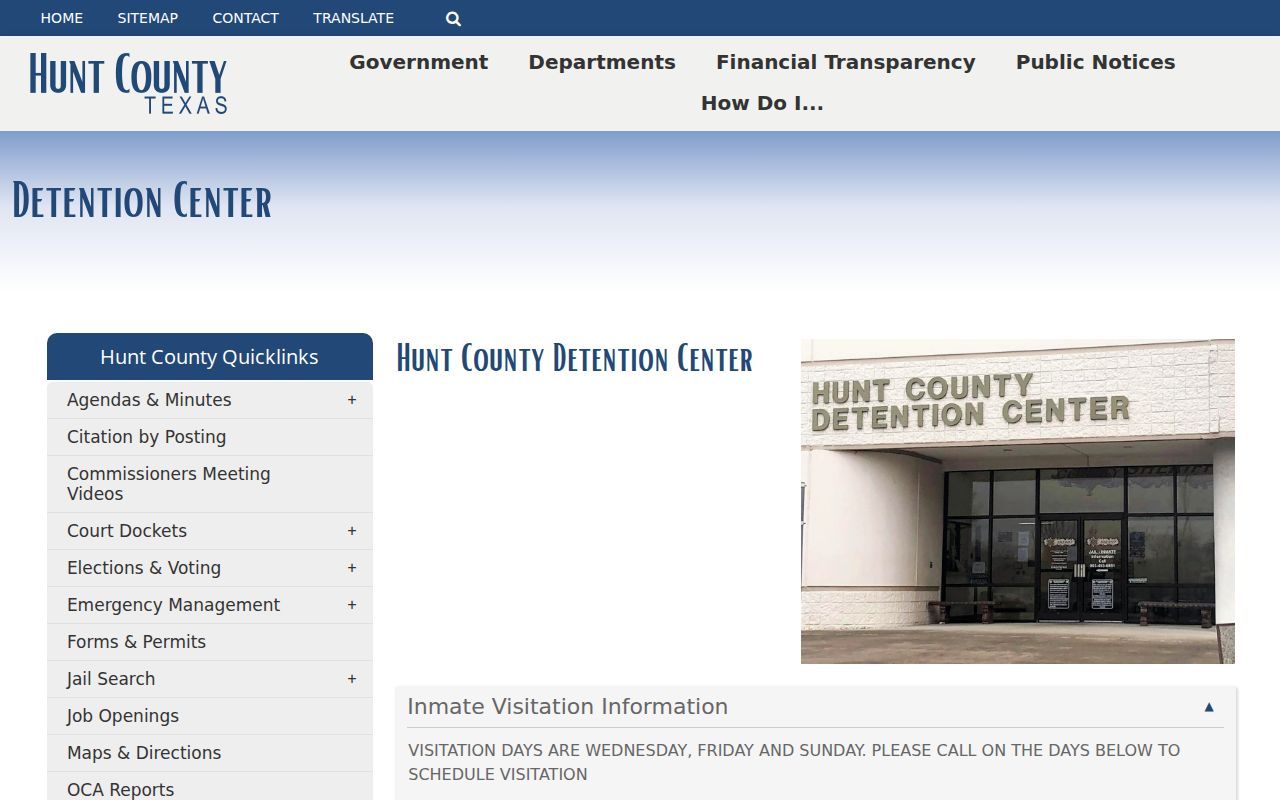
The official Hunt County Jail Inmate Search accepts a starting date, ending date, and result limit. Leaving the date fields blank and selecting Search returns current inmates. A date range can locate a past period of custody after someone leaves the current list. Results should be used to capture identifiers and custody facts, never to infer guilt.
Jail information is available at (903) 453-6849. The Detention Center is the local pretrial and short-term custody source. If a person has been transferred to state prison, switch to the TDCJ locator. VINE at (877) 894-8463 offers custody notifications but does not establish the court disposition.
The county's Detention Center page carries current jail and visitation instructions.
Booking details should be followed into the proper clerk's case file to learn what charge was filed and how it ended.
Public Access Laws in Texas
Access depends on the record. Hunt County sheriff reports are requested under the Texas Public Information Act. Filed court records follow court law and rules instead of ordinary TPIA handling. DPS criminal-history data is confidential except for releases authorized by Government Code Chapter 411. Juvenile, victim, identifying, active-investigation, sealed, and expunged material may be withheld or redacted.
Key Texas authorities:
Government Code Chapter 552 governs access to government-held public information and the Attorney General process.
Government Code Chapter 411 controls criminal-history dissemination and nondisclosure.
Rule of Judicial Administration 12 applies to judicial administrative records.
Code of Criminal Procedure Chapter 55A sets the current expunction framework.
Ask the office that maintains the record. Hunt County does not have one universal public-information officer for all departments.
Hunt County Records After Transfer
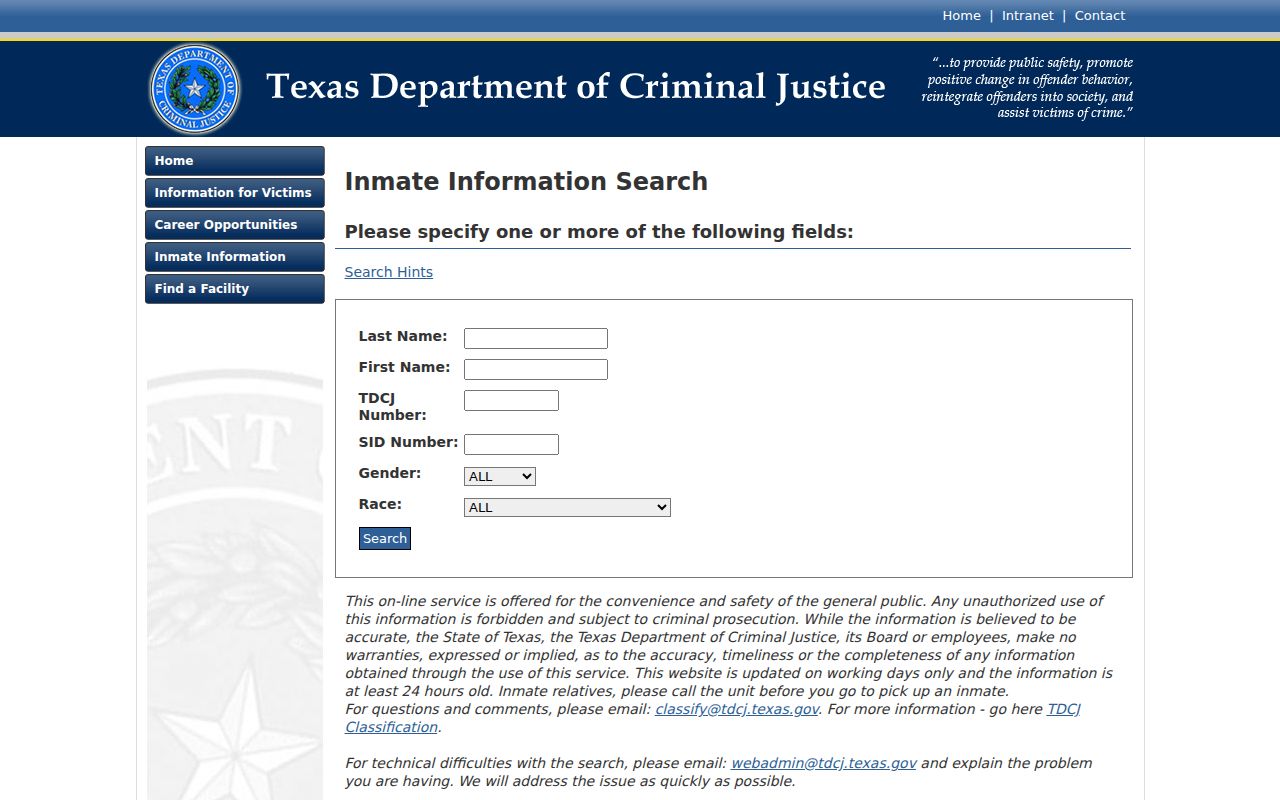
A person can vanish from the current county jail list because of release or transfer. That change does not remove the booking record or court file. For state custody, search the TDCJ Online Inmate Search by TDCJ number, SID, or name. Results can show state identifiers, unit, offense history, and projected release or parole information.
The county jail cannot answer a state-prison location question. Likewise, TDCJ does not replace the District Clerk's certified judgment. Federal custody is separate again and uses the Bureau of Prisons locator.
The official TDCJ source shows the state search form used after a Hunt County criminal case results in prison transfer.
Matching the custody system to the sentence prevents a false conclusion from a blank county result.
Sealed Expunged and Restricted Records
Texas expunction under Chapter 55A can require covered agencies to destroy or return qualifying records. Eligibility may arise from certain acquittals, pardons, mistaken identity, qualifying dismissals, or arrests that never produced a qualifying final charge. A dismissal alone does not guarantee expunction, especially when other charges arose from the same arrest.
An order of nondisclosure is different. It restricts public dissemination but leaves access for criminal-justice agencies and other entities listed by statute. It is often the relevant remedy after qualifying deferred adjudication or specified convictions. Hunt County petitioners should collect the arrest report, DPS personal review, and certified disposition, then confirm the current form and fee with the District Clerk because Chapter 55A was recodified in 2025.
| Remedy | Main effect | Record status |
|---|---|---|
| Expunction | Removal or destruction as ordered | Narrow statutory exceptions remain |
| Nondisclosure | Limits general public release | Authorized agencies retain access |
Hunt County Supervision Records
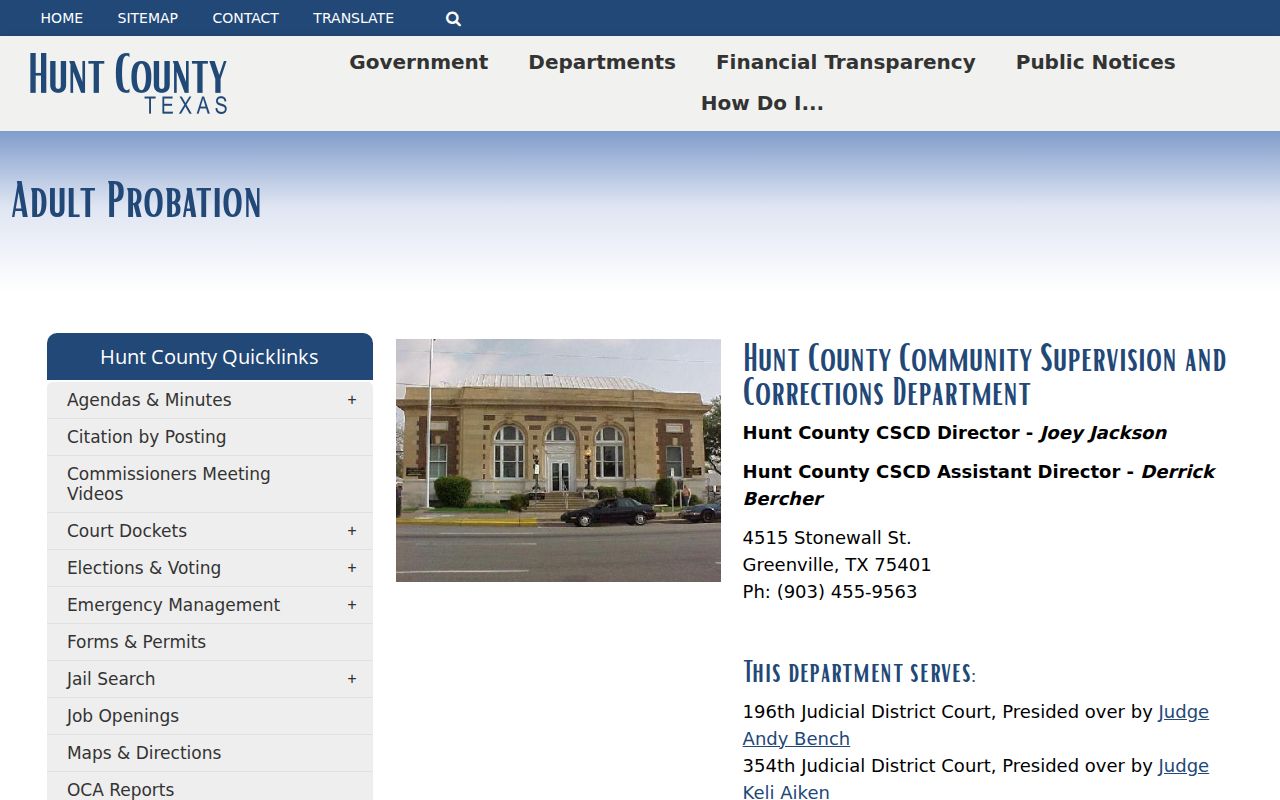
Hunt County calls probation community supervision. The county CSCD at 4515 Stonewall Street serves both district courts and both County Courts at Law. Its enabled self-service account lets a supervisee check an appointment time or fee balance with personal credentials. It is not a public name search. A public supervision outcome is best verified through the judgment or docket.
Parole is a state process. The Texas Board of Pardons and Paroles makes release decisions, and the TDCJ Parole Division supervises release to parole or mandatory supervision. Operational assessments, treatment details, and officer assignments are not assumed public merely because a judgment imposed supervision.
The Hunt County CSCD page identifies the local office and private account feature.
A motion to revoke or adjudicate may add public docket events, while the underlying supervision file remains more limited.
Hunt County Warrant Record Paths
No verified countywide warrant-name portal appears on the official county site. Contact the agency or court that may hold the warrant, search the public case where available, and use a focused records request when needed. Municipal capiases belong to the municipal court that issued them. County or district case warrants should be checked with the clerk or court using the cause number.
Online status can lag after payment, recall, or execution. Confirm the person's identity and warrant number, ask the issuing court about permitted resolution, obtain written proof of recall or clearance, and verify again after processing. Do not go to a sheriff counter expecting immunity from arrest. Search warrants, sealed indictments, juvenile warrants, and public failure-to-appear records follow different access rules.
Note: A blank jail result does not prove that Hunt County has no active warrant or court capias.
Hunt County Criminal Records by City
City police departments create their own reports, and municipal courts keep fine-only matters. County booking and higher criminal cases then converge in Greenville. The 2024 Census estimate ranking places Greenville first, Commerce second, and rapidly growing Caddo Mills third. Each local route has a distinct point of confusion, from Greenville's many counters to Commerce's city and university police split and Caddo Mills' City Secretary fallback.
Greenville Criminal Records
34,355 estimated residents in 2024. City police, municipal court, and county offices have separate files.
Commerce Criminal Records
9,800 estimated residents in 2024. Commerce Police and university police use different request channels.
Caddo Mills Criminal Records
5,257 estimated residents in 2024. The City Secretary provides the verified open-records fallback.