
Sex Offender Checks in Hunt County
The Texas Public Sex Offender Registry is the first official channel for Hunt County registry records. Texas DPS manages the statewide data and lets a reader search by a person's name or by place. Select Hunt in the county control when a street address is not known. A city, ZIP code, address, or map search can narrow the view. The National Sex Offender Public Website adds records from other states and participating jurisdictions, but its results route back to the source registry for the controlling profile.
Prepare a full name or a clear place before searching. Similar names can point to different profiles, and an address can change after a move is reported and processed. Hunt County's sheriff handles local registration and verification questions, while DPS publishes the public statewide record. Neither channel is a general court-case search. For the filed charge, judgment, or sentence behind a listing, consult the appropriate Hunt County criminal court case record.
Hunt County Registry Search by County
The live Texas registry search is the controlling tool, and its name, location, and map-search controls can change.
That screen is best treated as a starting form, not as a complete record. Open the matched profile and compare the photo, aliases, physical description, address status, reporting agency, and qualifying-offense details. A county filter is useful for broad local awareness, while a name search is better when the identity is already known. Search terms must match the live portal's current rules.
The steps are simple, but each result deserves care:
- Open the official DPS registry and read its conditions of use.
- Choose a name search or a Hunt County geographic search.
- Review the list or map and distinguish people with similar names.
- Open the full profile and confirm status through the listed agency when needed.
| Field Label | Type | Required | Notes |
|---|---|---|---|
| Last Name | Text | Depends on mode | Spelling matters in a name search |
| First / Middle Name | Text | No | Narrows possible name matches |
| County / City | Select or text | No | Select Hunt for countywide results |
| ZIP Code | Text | No | Uses a five-digit geographic area |
| Address / Radius | Text and select | Address mode | Centers a geocoded area search |
| Map / List View | View control | No | Changes how results are displayed |
How to Search the Texas Public Sex Offender Registry
DPS publishes both the search portal and background material about the registration program. The Texas sex offender registration program page explains the official state role and links readers toward current registry information.
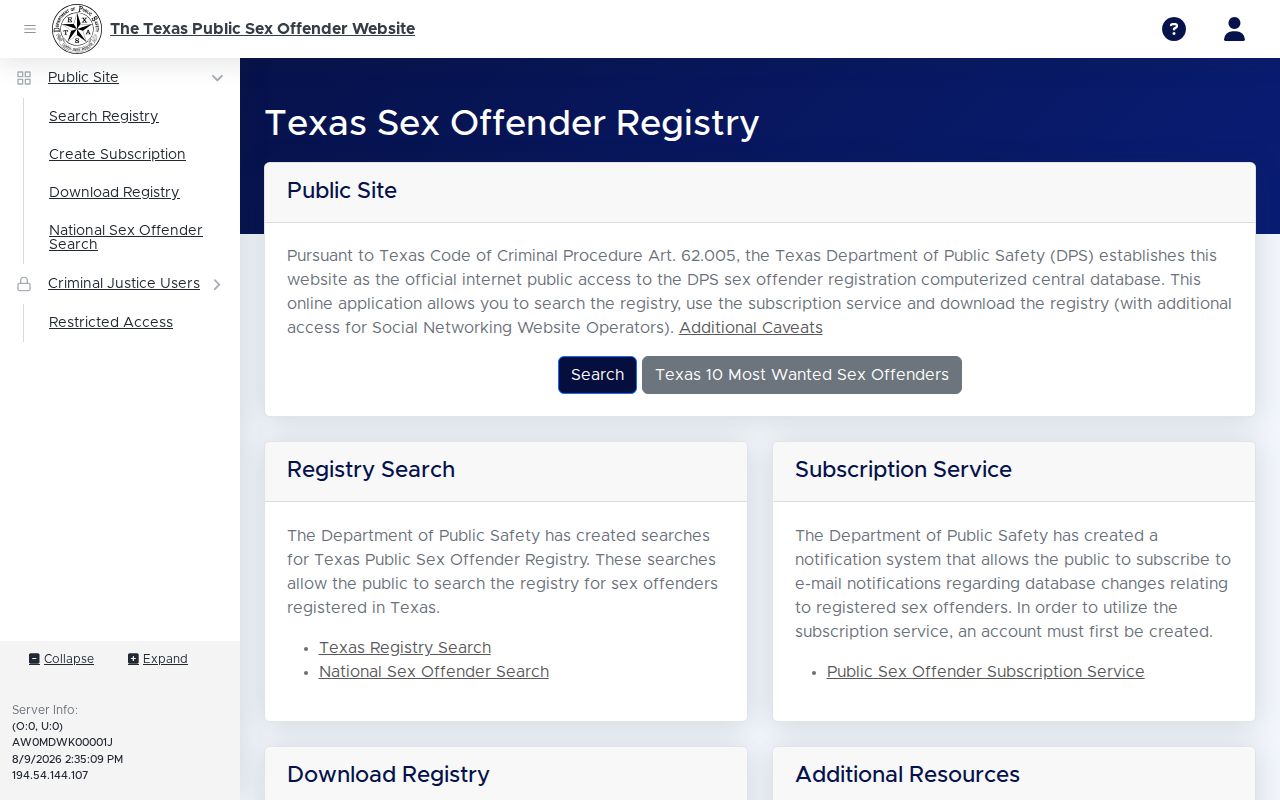
The program view helps separate two tasks. The public search is for notification and awareness. Registration duties are governed by Texas Code of Criminal Procedure Chapter 62 and managed through law enforcement. Hunt County residents should rely on the live portal's labels because DPS may revise field names or options without changing the underlying public purpose.
Start broad only when needed. A county search may return more profiles than a Greenville, Commerce, or Caddo Mills search. A ZIP search can cross city limits, and an address-radius search depends on how the site locates the street. When a search seems incomplete, switch modes before assuming no public profile exists. Then confirm the public status with the reporting agency named on the record.
Note: A registry search is a public-notification check, not a complete criminal-history report or a prediction of any person's conduct.
Rural Hunt County Registry Fallback
Rural routes, new streets, and different map spellings can defeat an address match. In that case, clear the address fields and search Hunt County through the county control. A city or ZIP query is another useful check. Map pins are produced through geocoding, which converts an address into a plotted point. That point is not a survey, a legal boundary, or proof that a person is inside a particular parcel.
Local government screens can also send a reader down the wrong path. The Commerce Municipal Court search concerns citations and municipal cases, not registered-sex-offender profiles.
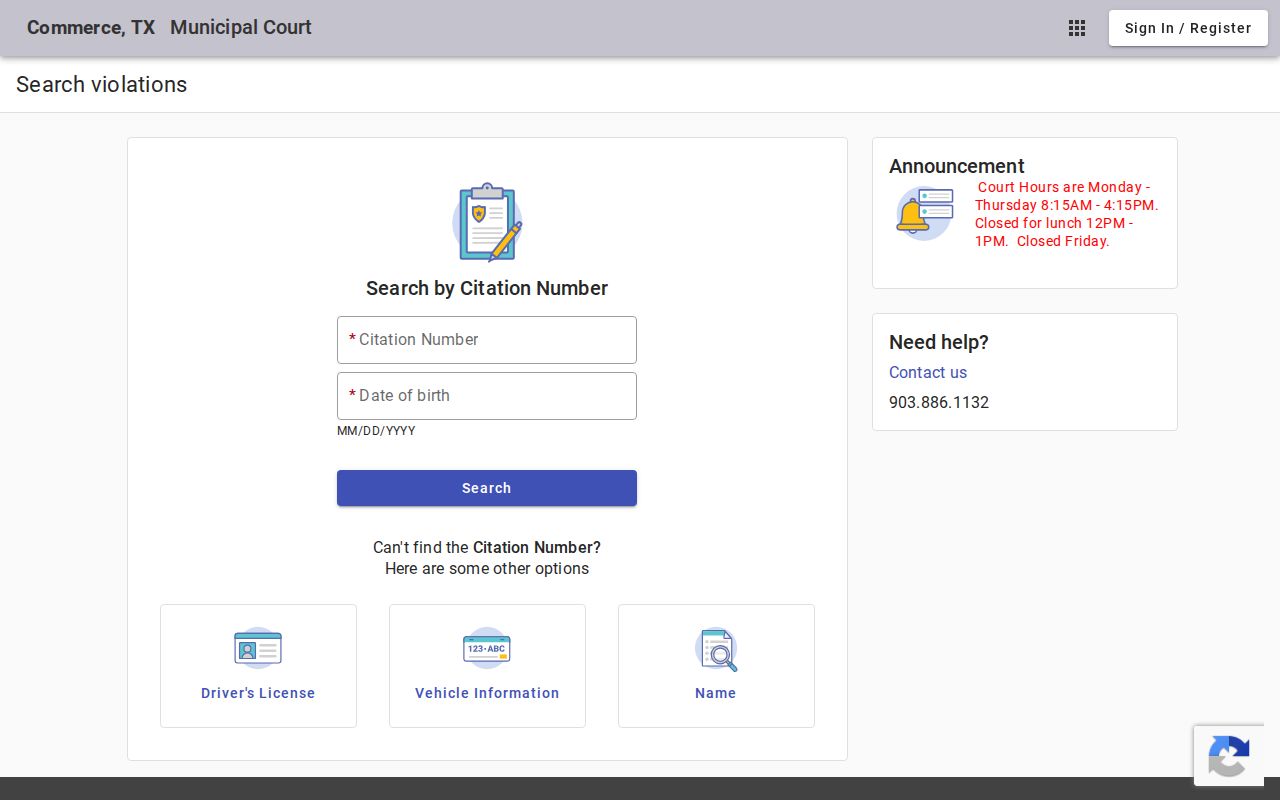
This contrast matters in Hunt County. Municipal court systems answer questions about city ordinance and fine-only cases. DPS answers the registry question. If a municipal screen has no result, that says nothing about whether a public registry profile exists. Switch to the DPS county filter, then use the sheriff contact for a suspected local reporting problem.
Inside a Registry Profile
A Texas public profile joins identity details with the public portion of a person's registration record. It may include a current or older photograph, aliases, physical features, identifying marks, vehicles, and an address or address status. The offense block can identify the statute, jurisdiction, conviction or adjudication date, and authorized victim-age or victim-sex category. School and work information may appear when it belongs in the statutory public set. Law-enforcement-only details remain outside public view.
| Name and Aliases | Registered name and alternate names used to distinguish an identity |
|---|---|
| Photo and Description | Available images plus sex, race, height, weight, hair, eyes, marks, or tattoos |
| Address and Status | Public address information, reporting agency, and registration or verification status |
| Offense Details | Qualifying offense, statute, jurisdiction, and conviction or adjudication date |
| Other Public Fields | Vehicles, school, work, and victim category when authorized for release |
| Not Shown | Confidential investigative, protected, and other law-enforcement-only information |
Read the offense and status fields separately. An offense title does not by itself state how long registration lasts. Likewise, a listed address does not promise that every move has already cleared the full reporting and update process. Check the profile date and agency. If a fact appears stale, report the concern rather than editing the conclusion in your own mind.
Hunt County Registry and NSOPW
The NSOPW national search offers a cross-state layer when a name or safety concern reaches beyond Texas.
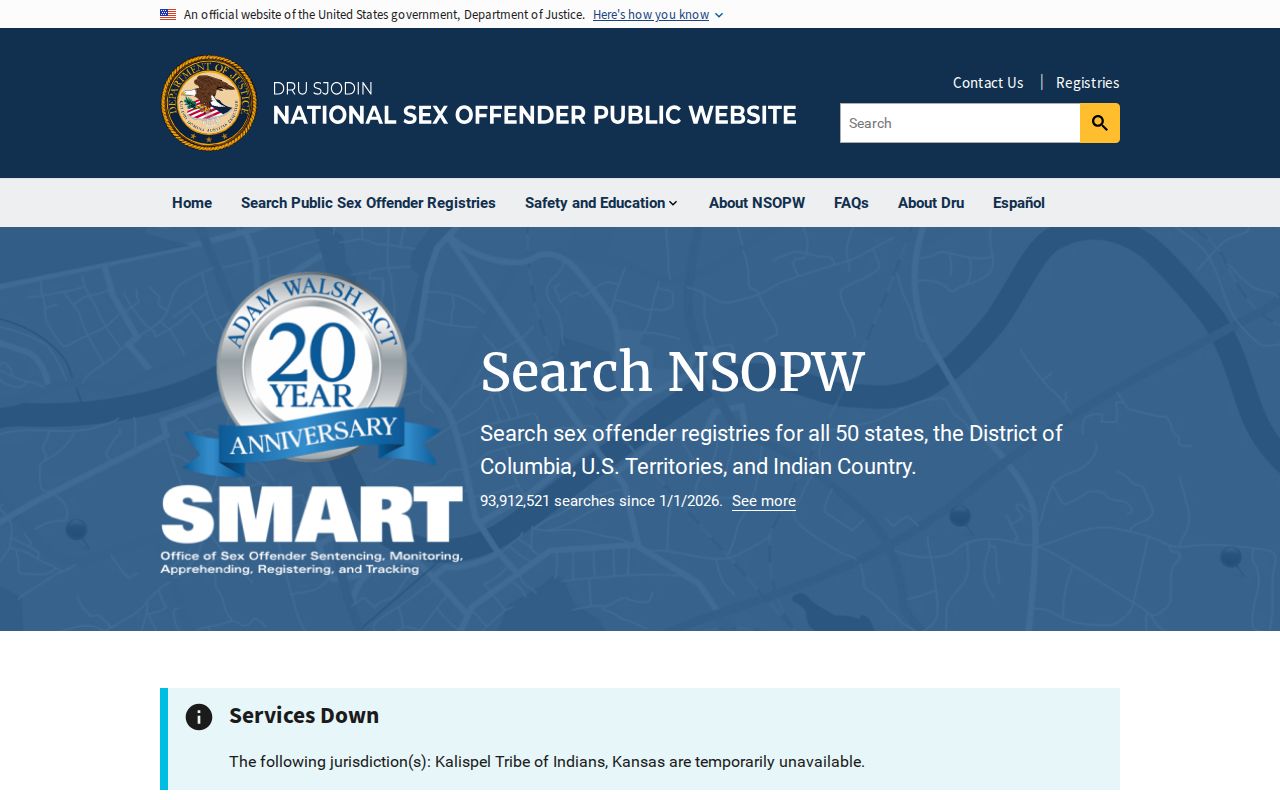
NSOPW is useful when prior locations are unknown or when nearby results may cross a state line. It does not replace the Texas source record. Jurisdictions control their own submissions, update cycles, and public fields, so follow a result to the source registry and read the jurisdiction's own warnings. For a Hunt County location, DPS remains the authoritative statewide public interface.
The two systems answer related but distinct questions. DPS gives Texas search controls and Texas public profile fields. NSOPW searches across participating jurisdictions. Neither is a court docket, and neither should be used to infer an unlisted charge or future risk. A careful search uses NSOPW for breadth, DPS for the Texas record, and the Hunt County sheriff for a local compliance concern.
Texas Registration Levels and Requirements
Texas does not simply label every public profile Tier I, Tier II, or Tier III. Duration comes from Chapter 62, the exact reportable conviction or adjudication, and any statutory exception or court modification. Many offenses listed in Article 62.101(a) carry a lifetime duty. Other reportable matters often carry a set period after release or discharge, commonly ten years. Juvenile duties can be modified or exempted under separate Chapter 62 provisions.
| Texas Category | General Duration | Public Reading Point |
|---|---|---|
| Article 62.101(a) lifetime offense | Lifetime, subject to statutory exceptions | Read the offense and current status |
| Other reportable conviction or adjudication | Statutory post-release or discharge period, often ten years | Do not infer the term from the title alone |
| Juvenile adjudication | Chapter 62 rules with possible exemption or modification | Court action can affect the duty |
| Federal or out-of-state duty | Texas determines whether the law is substantially similar and reportable | Check both source and Texas status |
Verification frequency can rise for certain statutory categories, including people treated as sexually violent predators. The research does not support one local walk-in schedule or one fixed Hunt County verification rate for all registrants. Call the sheriff before visiting. The public profile and Chapter 62 provide a safer basis than assigning a tier from an offense name.
Hunt County Registration Contact
Hunt County's Criminal Investigations Division roster identifies a sex-offender investigator. Registration questions and reports of suspected noncompliance may be routed through the Hunt County Sheriff's Office CID at 2801 Stuart Street in Greenville or by calling (903) 453-6800. The official material does not state a separate public walk-in schedule or fee. Call first and ask what appointment or identity information is required.
Hunt County Sheriff's Office
Sex-offender investigator through CID
2801 Stuart Street
Greenville, TX 75401
(903) 453-6800
City police and municipal court pages may help locate the right local agency, but they are not county registry databases. The Caddo Mills Police Department page shows that city's police and dispatch route.
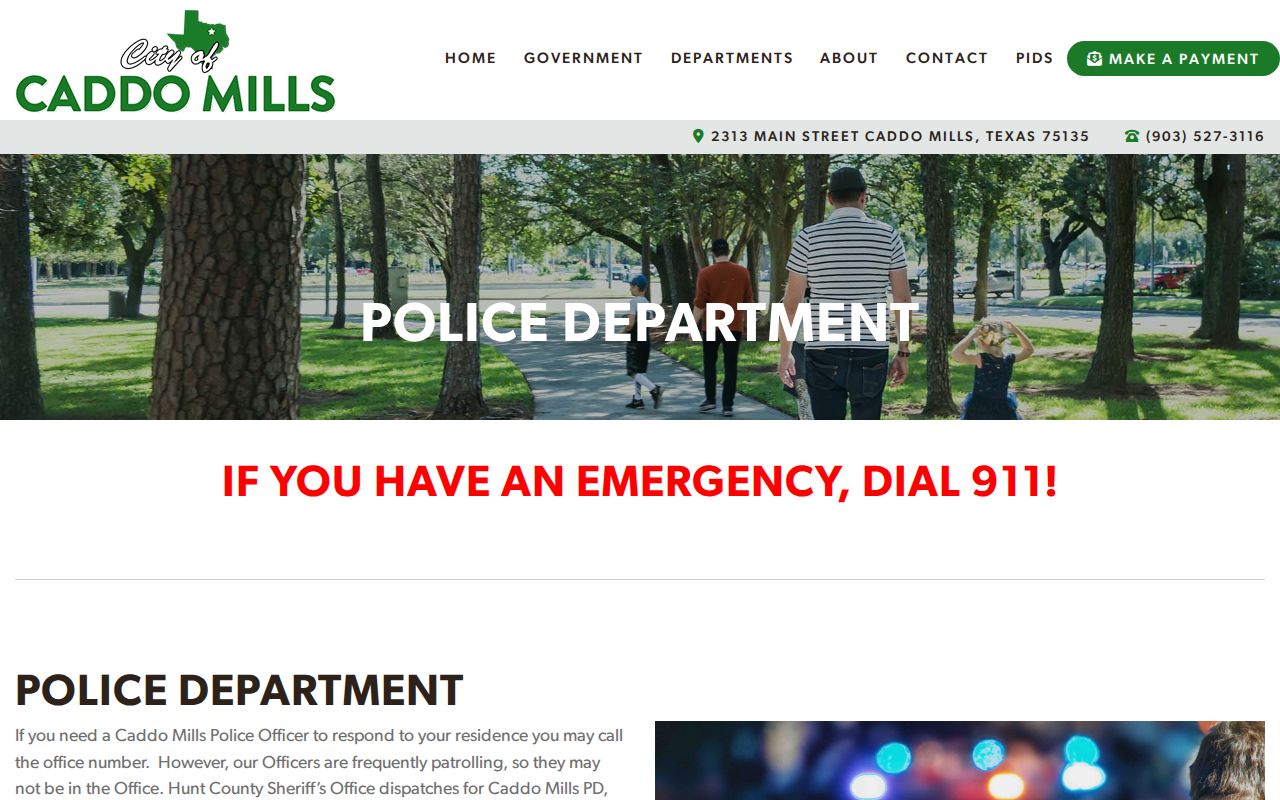
Use such a local police contact for an urgent public-safety matter or when directed by law enforcement. Use DPS for the registry search. This division avoids asking a municipal office to supply a statewide profile it does not maintain.
Reporting Hunt County Registry Errors
When an address seems outdated, record the profile, status, and reporting agency without confronting the person at the location. Contact law enforcement and describe the possible mismatch. A delayed update can follow a move while verification and data processing are still underway, so a public map difference is not proof of a registration offense. The sheriff can route a Hunt County compliance report, while DPS controls publication of the statewide public record.
A municipal court screen answers another kind of question. The Caddo Mills Municipal Court page identifies its court and current docket route.
That local court source may help with a city citation or fine-only matter, but it cannot confirm whether a Texas registry address is current. Send registry concerns to the reporting law-enforcement agency. Preserve public safety, avoid publishing a private theory, and let the agency compare the report with nonpublic verification records.
Community Notification and Lawful Use
Texas publishes registry data for notification, awareness, and sound safety planning. It is not an invitation to confront, follow, threaten, or shame a registrant or the person's household. The record can guide choices such as reviewing routes with family members, checking a neighborhood through official sources, and reporting a suspected violation to law enforcement. It cannot establish that a person will commit a future act.
Texas Code of Criminal Procedure Chapter 62 controls registration and the public program. Local residency restrictions, if any, require a verified city ordinance. Do not assume a statewide distance rule, and do not treat a map pin as a measured property line.
Misuse warning: Texas registry information may not be used to injure, harass, or commit a crime against a registrant. Report suspected noncompliance to law enforcement and never attempt personal enforcement.
Note: Confirm a public profile through its reporting agency when a date, address, or status will affect a personal safety plan.